
Planting that looks wild — but is carefully designed.
Naturalistic planting design is not simply making a border look informal. In Nigel Dunnett’s work it is a designed plant community: beautiful, legible, emotionally powerful and fitted to the conditions of the site.
The aim is not to copy nature literally. It is to understand how plant communities work — their layers, rhythms, textures, colour and seasonal movement — and use that knowledge to create gardens and public landscapes that feel alive.
Dunnett summed up his approach as “high-impact, low-input”: plantings with strong visual appeal, long seasonal interest and biodiversity value, but low demand for water, fertiliser and intensive maintenance.
Two ideas sit at the centre of the method.
Planting as an art form, tuned to nature
Naturalistic planting has to move people. It must do more than fill space or look ecologically correct: it should create beauty, drama, warmth and fascination — the kind of emotional response we usually reserve for art.
Planting as essential infrastructure
Planting is not decoration added once the real design work is done. In Dunnett’s view, plant-rich landscapes are essential to healthier, cooler, more liveable cities — part of how a place works, not how it is dressed.
High-impact, low-input planting
The “Sheffield School” approach — developed through Dunnett’s work with James Hitchmough at the University of Sheffield — treats planting as a functioning system rather than a decorative layer. A few principles run through all of it:
- Create dramatic, beautiful effects with genuine public appeal.
- Hold interest across the seasons, not just in one short flowering peak.
- Use colour and abundance to make planting uplifting — and socially accepted.
- Build biodiversity value into the planting from the start.
- Cut the inputs: water, fertiliser, labour and intensive maintenance.
- Manage with simple, ecological techniques closer to meadow cutting than to border gardening.
Reading nature, not copying it.
Dunnett draws a line between listing the plants of a wild habitat and understanding the visual and functional patterns that make a community feel natural. His method is less botanical mimicry, more ecological imagination.
He looks at how plants arrange themselves in the wild — repeated forms, layered growth, compatible habitats, seasonal succession, moments of abundance and periods of quiet — and translates those cues into designed planting.
The result is a kind of “future nature”: planting that evokes natural landscapes while being adapted to contemporary gardens, public spaces and a changing climate.
Case study
Pictorial Meadows
Pictorial Meadows began as a way to bring supercharged meadow effects into ordinary urban places: derelict land, housing estates, roadsides and parks. The point was never ecological purity alone — it was public joy.
Colour, abundance and long flowering seasons made these meadows socially robust. People wanted to approach them, photograph them, walk through them and claim them as part of everyday life.
Nigel’s low-input, high-impact ideas are so important.Piet Oudolf
The hierarchy of a successful naturalistic planting
The strongest emotional response does not come from wildness alone. People need a sequence: first safety and framing, then legibility, then immersion, colour and wonder.
Framing needs
Order, safety, refuge, intimacy and clear edges. These are what make people comfortable with a degree of wildness in the first place.
Legibility needs
Structure, rhythm, repetition and prospect. The planting has to be readable at a glance — understood, not just tolerated.
Emotional needs
Immersion, colour, form, awe and wonder. This is where naturalistic planting stops being merely competent and becomes memorable.
What naturalistic planting is — and isn’t
The look is informal; the thinking behind it is not. A handful of decisions separate a designed plant community from a patch that simply ran wild.
Do
- Design plant communities, not isolated specimens
- Use repetition and rhythm so the planting can be read
- Match plants to the real conditions of the site
- Think in layers: ground, matrix, seasonal accents, structure
- Build in paths and intimacy — planting to move through, not just to look at
- Plan the management as part of the design
Don’t
- Confuse naturalistic planting with random planting
- Fill a large area with one repeated mix and expect emotional depth
- Use “wild” as an excuse for a lack of structure
- Ignore edges, paths, prospect and refuge
- Choose plants only because they look good in flower
- Forget the planting must work for people as well as wildlife
What the book gives you that a web page can’t
This guide is the idea in outline. The book is the whole method — the philosophy, the ecological thinking, the design toolkit and the plant knowledge, in one place:
The design toolkit
Layers, matrix planting, structure and seasonal accents — the grammar Dunnett uses to compose a community.
Reading nature
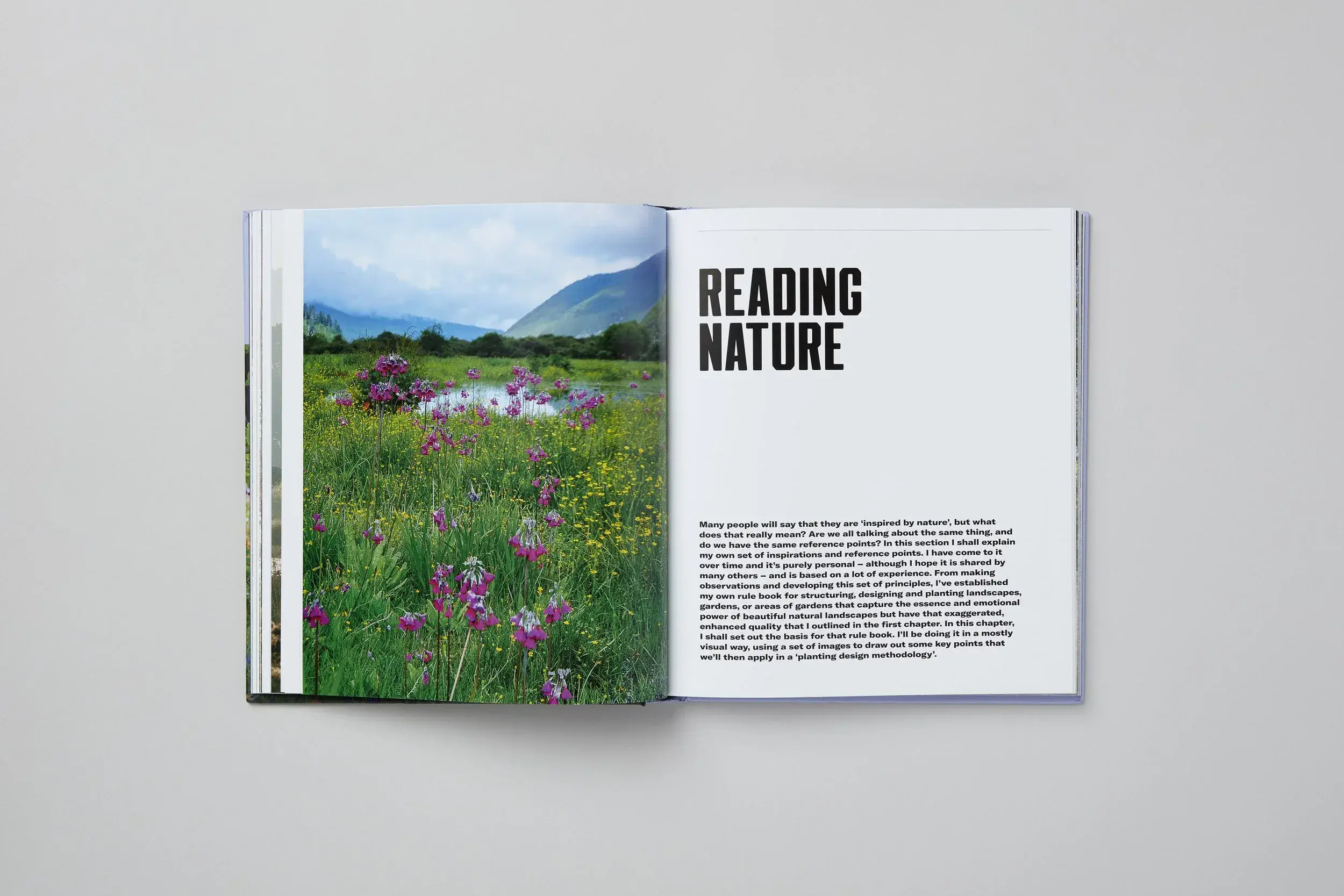
How to translate the patterns of wild plant communities into planting that works in a designed space.
Plant communities
Choosing plants that thrive together and hold the scheme through the seasons — biodiverse and self-sustaining.
Meadows & urban planting
From sown annual meadows to perennial public schemes — the work behind the Olympic Park and Pictorial Meadows.
Cultivation & management
Establishment, maintenance and the low-input techniques that keep a naturalistic planting alive and legible.
The thinking behind it
Why plant-rich landscapes matter — for people, for wildlife and for the cities we live in.

The book · reprinting
Naturalistic Planting Design
Winner · European Garden Book Award
“Every page is — literally — brilliant.” — Mary Keen, The Daily Telegraph
Dunnett’s definitive account of his practice: the philosophy, the ecological method, the design toolkit, the plant communities and decades of work in meadows, public planting and urban landscapes. Back in print and available again.
Inside the book
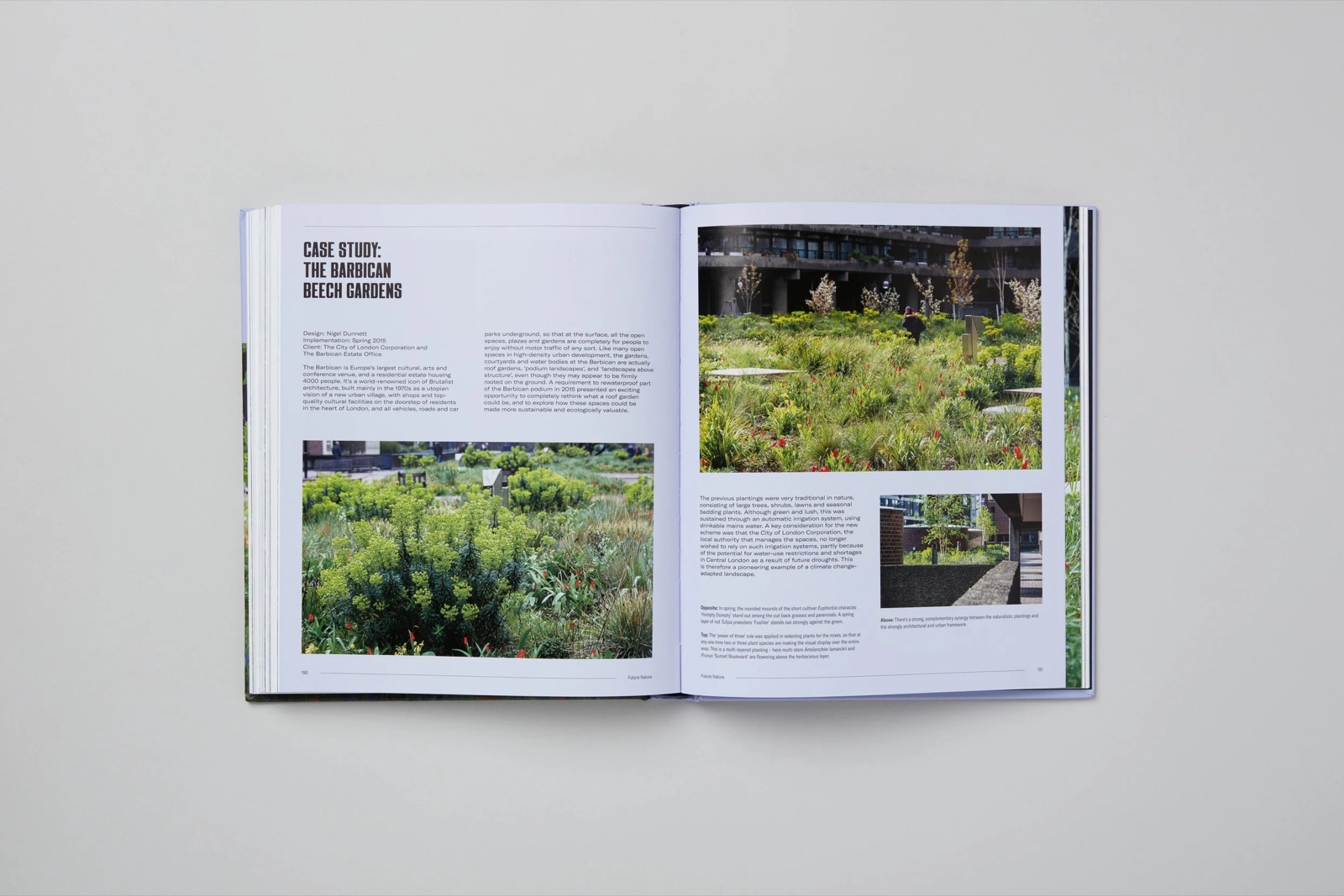
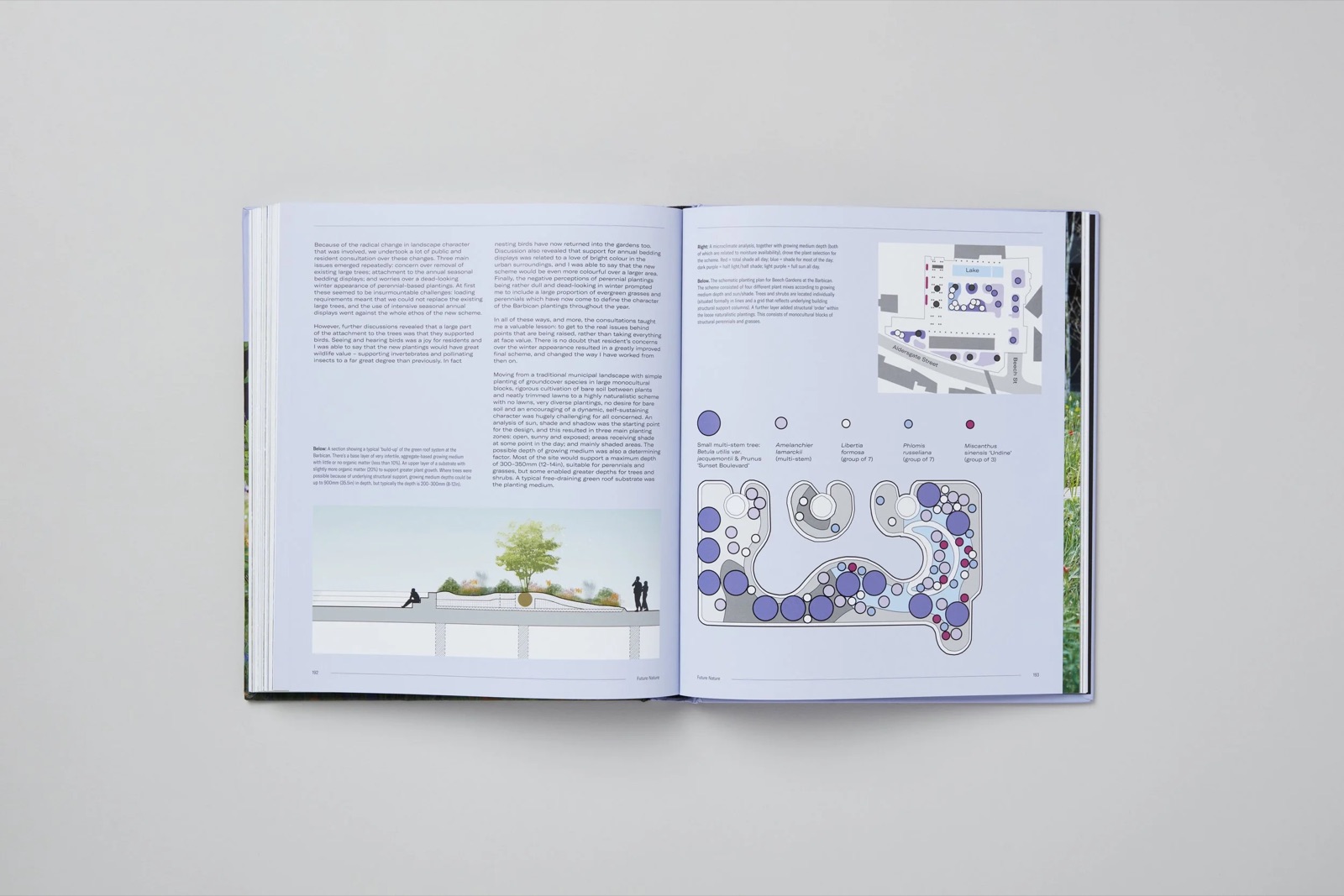
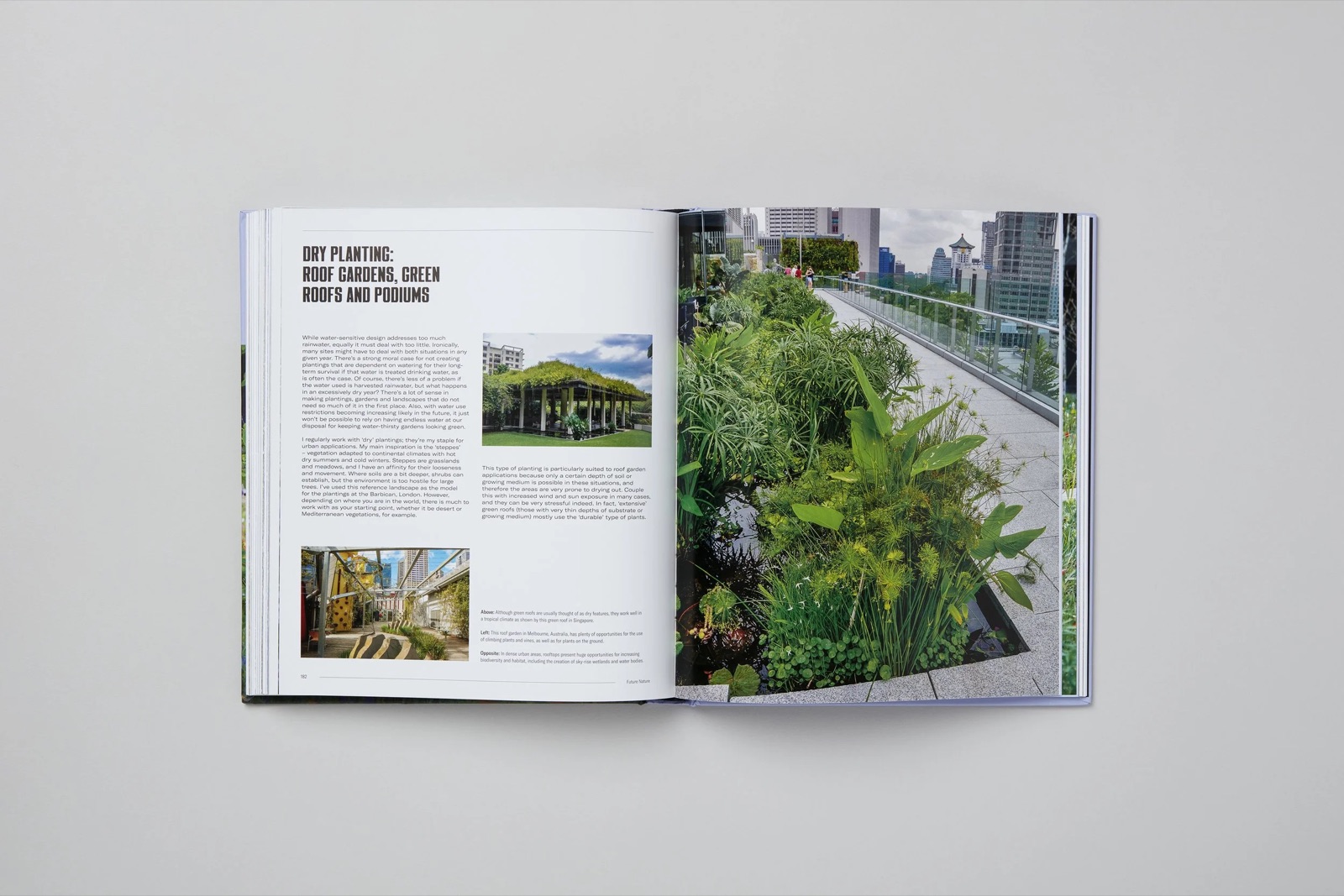
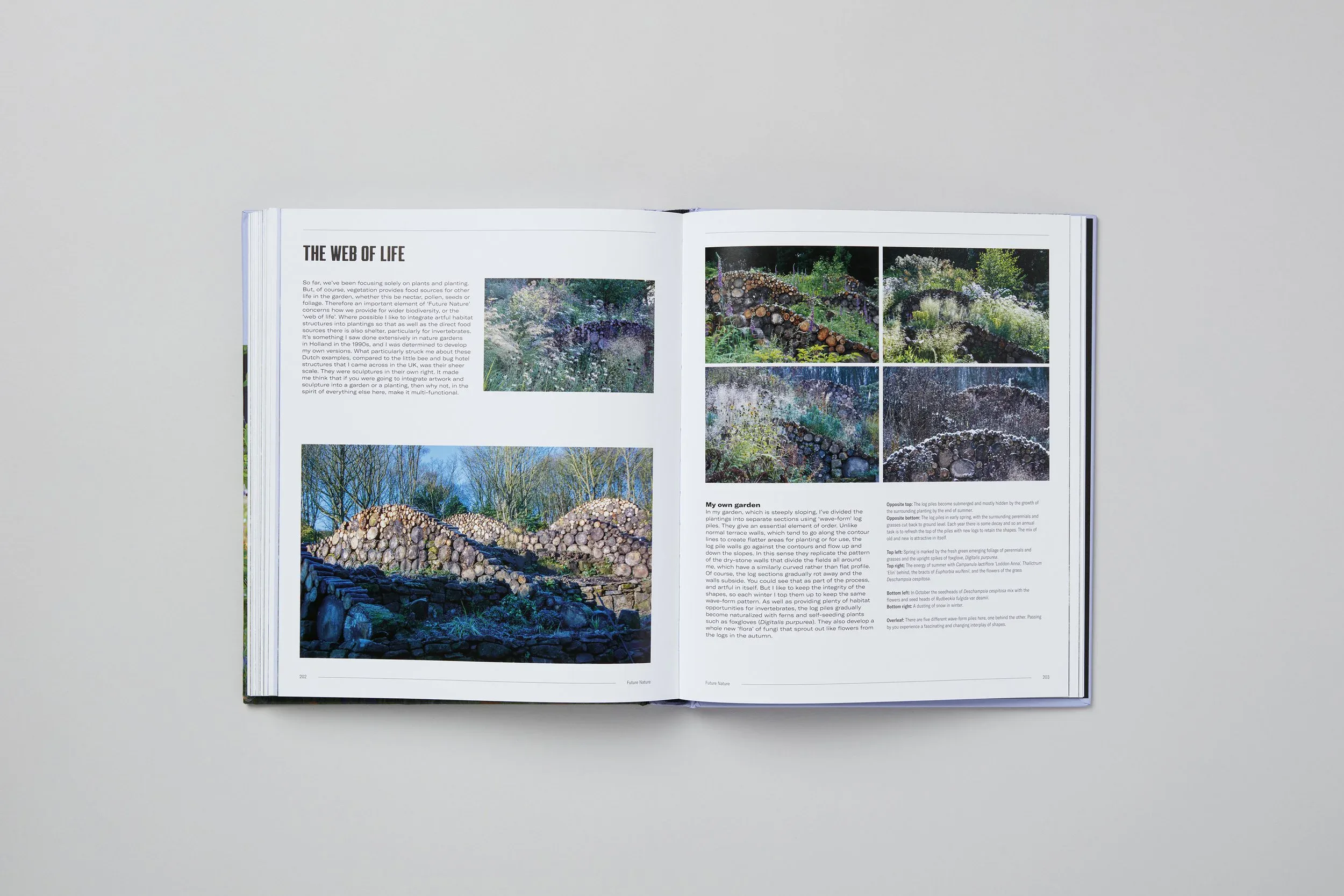
Photographs, plant communities and worked examples — the detail that turns a principle into a planting that lasts. A few spreads: