

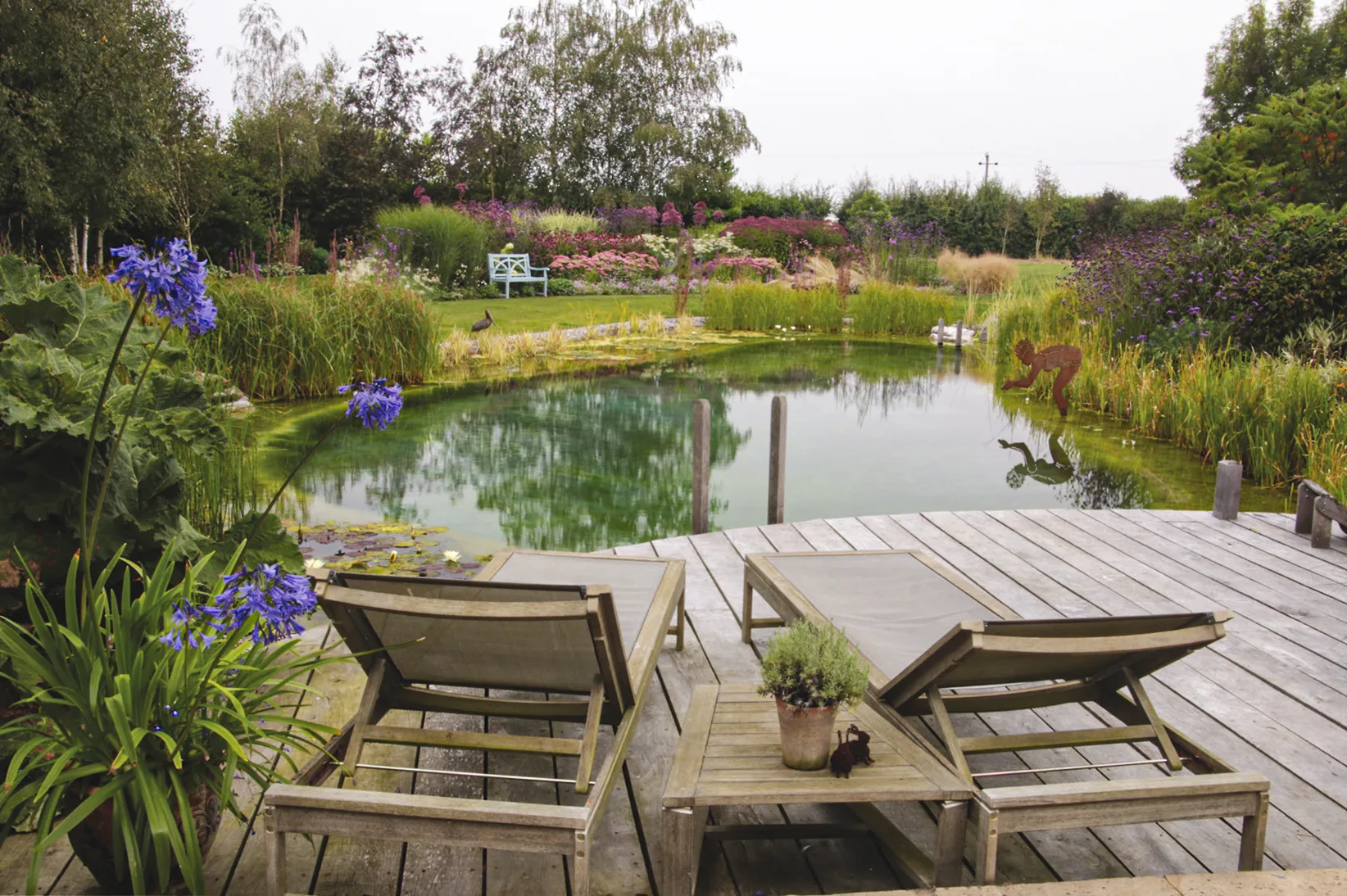
A conventional pool fights nature. A natural pool puts it to work.
Instead of dosing the water with chlorine to kill everything in it, a natural swimming pool keeps the water clean the way a healthy lake does — with plants, gravel and microscopic life. You swim in fresh water that has never been treated with a single chemical.
The trick is a division into two zones. A deep, plant-free swimming area gives you room to swim; a shallower, planted regeneration area does the cleaning — a plant-filtered pool, not a chemical one. Only biological processes are used — no chlorine, no salts, no ozone, no UV — so you emerge feeling fresh rather than stinging and bleached. And in a well-balanced pool you never replace the water; you only top up what evaporates.
It is the same idea behind reed-bed sewage treatment and green roofs: bring living nature into the systems we use to manage our lives, and let it do the work — only here the reward is a pool you actually want to swim in.
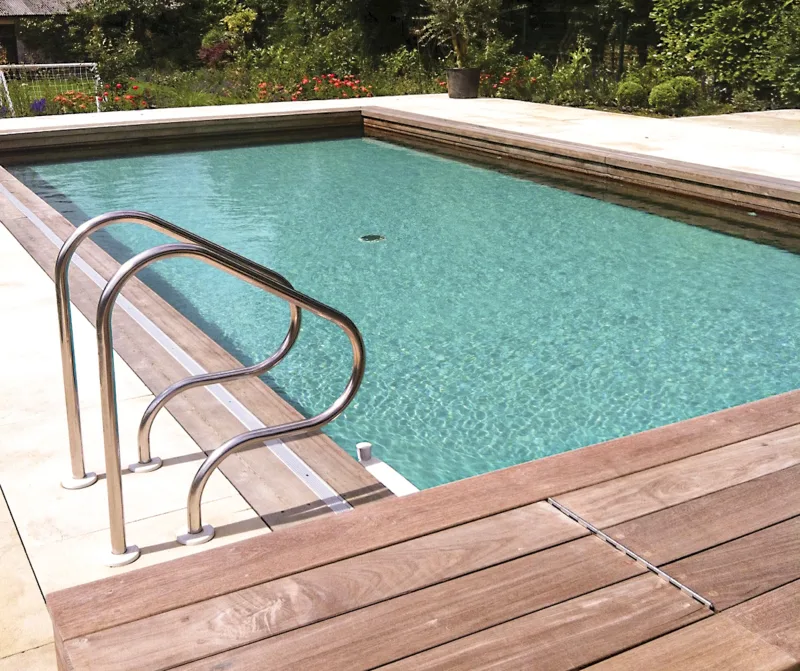
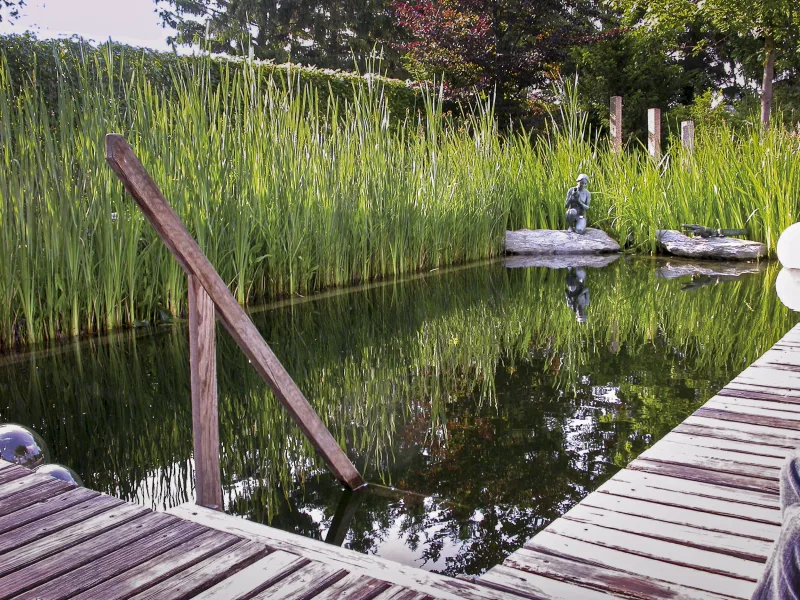
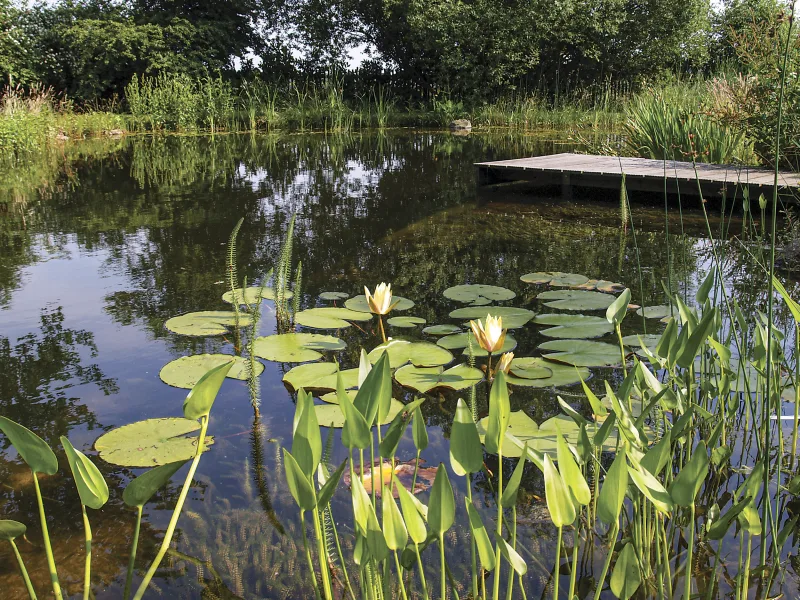
How the water cleans itself
Clear, healthy water in a natural pool is not the absence of life — it is the result of an enormous amount of it, most of it far too small to see. Three things are happening at once.
- Biofilm — the purification factory. Every underwater surface — gravel, plant stems, even the liner — grows a thin film of bacteria, algae, fungi and tiny grazers. Its branching structure creates a vast adsorption surface that traps and digests dissolved nutrients, germs and pollutants. Pack that film onto a gravel filter bed with water percolating through it, and you have the central engine of the whole pool.
- A balance that polices itself. Floating green algae feed on sunlight; water fleas (Daphnia) and copepods (Cyclops) feed on the algae. A new pond turns green for a few weeks, then clears as the grazers catch up — and from then on the system self-regulates, holding the water clear without your help.
- Starve the algae, not the swimmer. The real key to clear water is keeping nutrients — phosphorus above all — extremely low, so algae simply cannot bloom. The plants and their mycorrhizal fungi strip those nutrients out; some species even release compounds that suppress algae and harmful bacteria.
Natural swimming pools offer a way to get plants and micro-organisms to clean the water for us, instead of horrible smelly chlorine or other chemicals.Noel Kingsbury · from the foreword
The cardinal rules
A natural pool is forgiving once it is balanced — but unforgiving about a handful of early decisions made before a drop of water goes in.
Do
- Spend your time on planning — 80% of pool problems start there
- Give the swimming area at least 3 × 6 m (10 × 20 ft) and 1.8 m (6 ft) depth — 2–2.5 m (6½–8 ft) is better
- Site at least part of the pool in shade — cooler water means fewer algae
- Keep the water’s nutrients low — that, not chemistry, is what keeps it clear
- Build a proper capillary barrier so the garden can’t feed the pool
- Keep the current gentle inside the swimming zone
Don’t
- Use chlorine, biocides, ozone or UV — they kill the living filter
- Let run-off rainwater discharge into the pool
- Stretch or over-tension the liner
- Panic at the first algal bloom — a brief early green is normal and passes
- Skip the water analysis — UK mains phosphorus can run 200× too high
- Expect an ornamental garden pond to double as a pool
How to build one in six steps
From a formal mirror of water to a plant-fringed pond, the build follows the same sequence. Here is its shape — the soil and water chemistry, the filter types and the planting plans fill the chapters of the book.
- Excavate the basin Dig carefully — the pit defines the pool’s shape and later changes are hard. Excavate the swimming area to 2–3 m (about 6½–10 ft) for a stable volume, keep its walls vertical, and shape the shallower shelves of the regeneration zone. Store the topsoil, and clear every sharp object before the liner goes anywhere near.
- Build the sub-construction On the compacted floor, pour a level concrete base and build the wall that frames the swimming area. Set the conduits for lighting, inlets and the skimmer now, and add concrete footings anywhere a boulder, deck post or bridge will press on the liner.
- Lay the underlay & liner Cushion the whole pit with protective fleece, then roll out a 1.5 mm (60 mil) PVC or EPDM liner from the deepest point up. Never stretch it; smooth out the large folds — the swimming area must be wrinkle-free, the rest you hide later under stone and substrate.
- Set the superstructures Now build everything that sits above the liner inside the pool: steps, deck and bridge foundations, single boulders, and the floor of the swimming area — left as liner or paved with flags on a mortar bed. Heavy loads get an extra fleece pad to spread the pressure.
- Plant the regeneration zone & fill Fill the regeneration areas with graded filter gravel over the drainage pipework, then plant the depth zones. Raise the water with a spray head so new plants aren’t torn loose, alternating filling with planting until the pool is full. This living zone is the filter.
- Build the capillary barrier & trim Raise the edge about 10 cm (4 in) above the soil and 5 cm (2 in) above the top water line so garden run-off — and the nutrients it carries — can never wash in. Only once the water is near its final height do you fix and trim the liner. Add a controlled overflow well away from the house.
Much of the craft is in the water itself: matching your fill-up water (well, mains or rainwater) to a carbon- or phosphorus-limited strategy, sizing the regeneration zone, and choosing plants suited to lean, low-nutrient conditions. That is where decades of the authors’ experience earn their keep.
For the full step-by-step build, see the book: How to Build a Natural Swimming Pool by Wolfram Kircher and Andreas Thon.
What the book gives you that a web page can’t
The authors reckon careful planning prevents eight pool problems out of ten — and this book is that planning, whether you build it yourself or brief a contractor. It is the definitive natural swimming pool book — decades-deep, revised in 2025 to the latest FLL standards:
Four pool models
From a plant-only swimming pond to pumped filter-bed systems — and how to choose the one that fits your garden, your use and your budget.
The water, demystified
pH, hardness and phosphorus made usable: carbon- versus phosphorus-limitation, and how to read a real analysis of your own fill-up water.
250+ plants
Natural swimming pool plants for every depth zone, with USDA hardiness ratings and ready-made planting plans organised by theme.
Filters & construction
Technical Wetlands, biofilm substrate filters, single- and multi-area layouts, and the wall-on- and wall-under-sealing build types.
Real case studies
Built pools from Austria, Germany, the UK and the US — with what worked, what it cost and why.
Maintenance & wildlife
Algae control, water level, hygiene — and the dragonflies, frogs and newts that move in once the pool is alive.
Why now
For most of the last century the smell of chlorine was the smell of safety, and a pool without it was unthinkable. That has changed. A natural pool is part of a whole new family of living technologies — reed beds, bioremediation, green roofs and walls — that ask nature to manage things for us, and manage them more gently.
It also gives back. A natural pool becomes a constructed wetland in your garden: a cooler microclimate in summer, a refuge for dragonflies, frogs and rare wetland plants, and a body of water you never drain and refill. The pleasure is yours; the habitat is everyone’s.
Almost there.
Confirm the email in your inbox — your sample follows right after. If you don't see it, check your spam or promotions folder.
Read before you buy.
Get a free sample of the book as a PDF. Join the Filbert Press Letter and we'll send the link the moment you confirm your subscription.
The complete guide
The complete handbook — 328 pages
“A well laid out, detailed and useful book — I only wish I’d read it before building my own.”
Ben Law · Permaculture magazine
Decades of the authors’ experience, in one place: every filter type and pool model, the full water chemistry, the step-by-step build, 250+ plants and worked case studies from four countries. The planning that prevents the expensive mistakes — whether you build it yourself or brief a contractor.
See the book →Inside the book
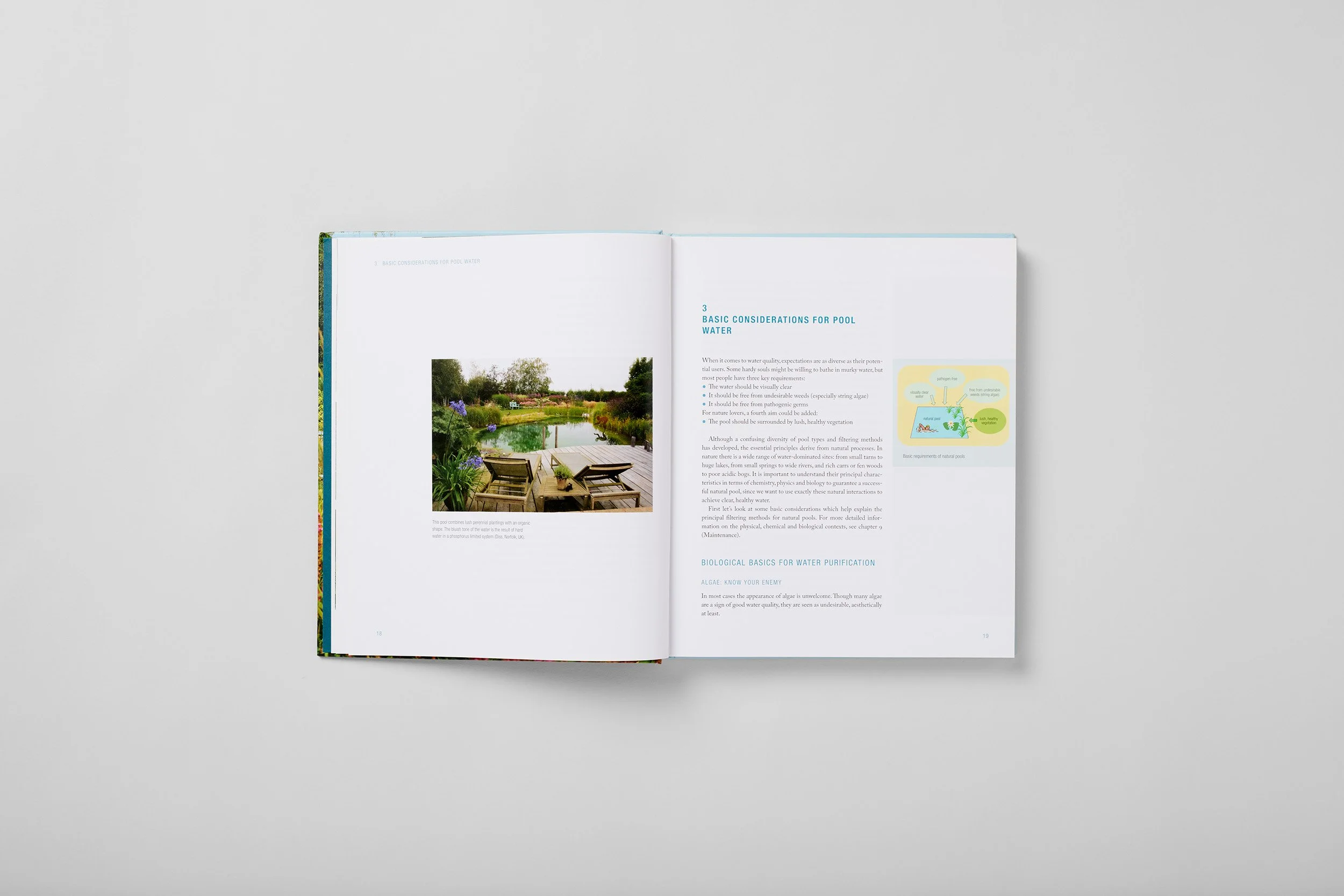
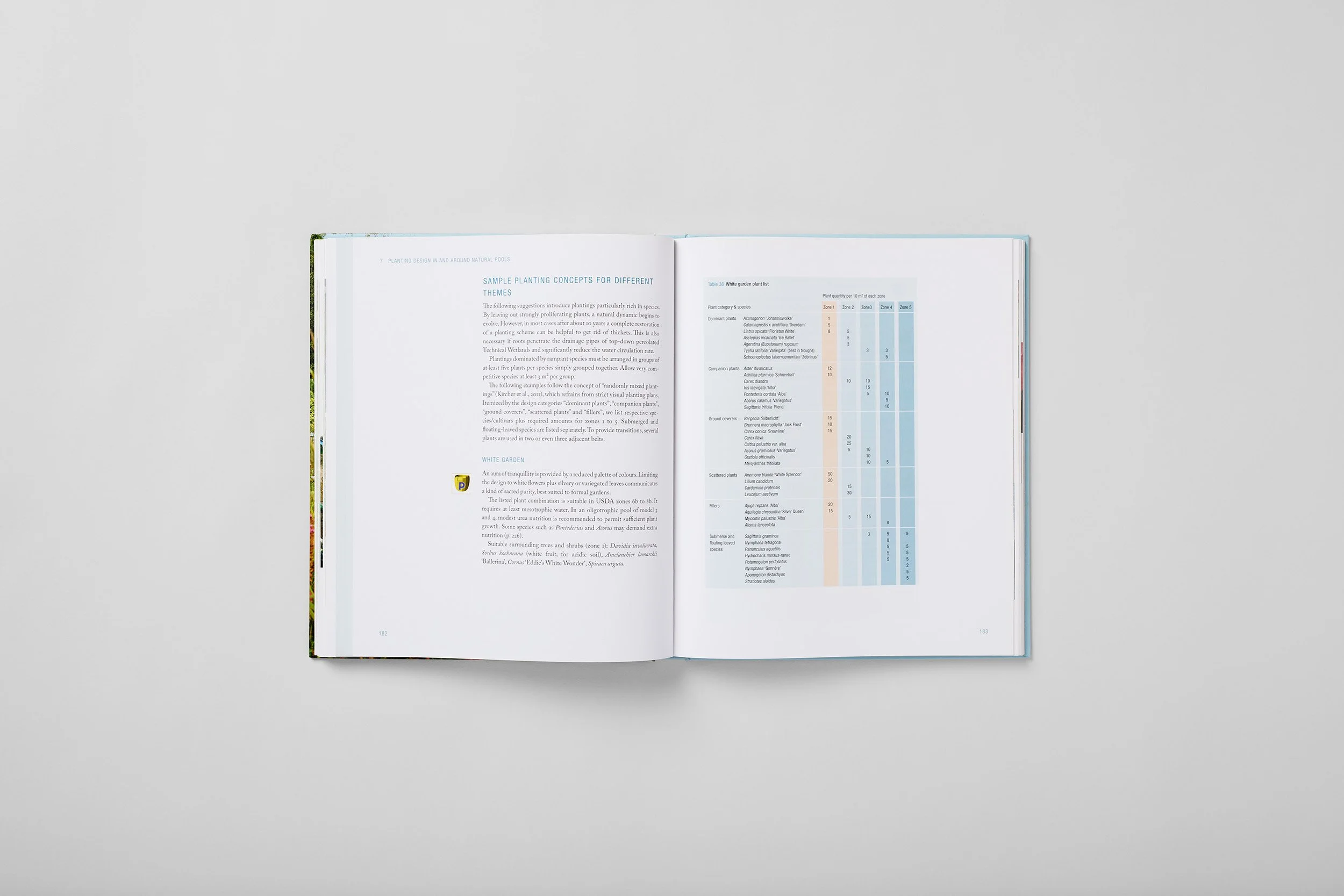
Diagrams, sections, plant tables and worked case studies — the detail that turns a good idea into a pool that lasts. A few spreads:

Who wrote it


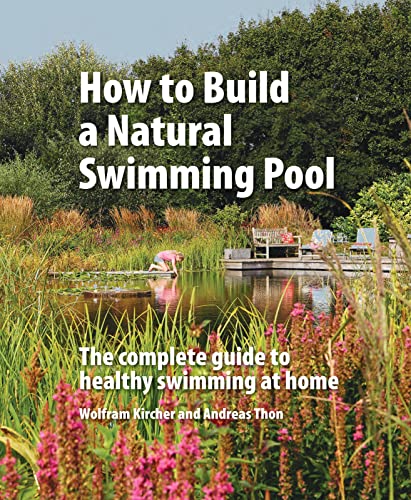
How to Build a Natural Swimming Pool
Revised edition · with the latest FLL guidance
The complete guide — design, construction, planting and maintenance — to a chemical-free natural swimming pool of any kind, from a formal mirror of water to a plant-rich swimming pond. 328 pages, with more than 250 plants, diagrams and case studies.
“A comprehensive, clear and tightly written book — full of illustrations, diagrams and case studies.” — Annabel Downs, Garden Design Journal
See the book →